
Insulation in SeaTac
Professional insulation services in SeaTac and surrounding areas • Licensed & Insured • Free estimates
Insulation Services in SeaTac
Attic insulation
Wall insulation
Crawl space insulation
Spray foam insulation
Why Choose TopVolk Construction LLC in SeaTac?
Licensed & Insured
Fully licensed contractor with comprehensive insurance coverage for your peace of mind.
Local Service
Serving SeaTac and surrounding areas with fast response times and local expertise.
Direct Communication
Work directly with Vladislav - no middlemen, clear expectations, honest recommendations.
Quality Guaranteed
100+ projects completed since 2023. We pay $100 for every day past the agreed deadline.
15% OFF All Labor
Book your renovation this week and save on labor costs.
Materials are billed separately and are not included in the discount.
TopVolk Construction handles insulation in SeaTac, WA — R-49 attic retrofits, crawl space encapsulation, spray foam rim joists, 100+ projects completed.
Last updated September 2026
SeaTac Insulation — Airport Noise, R-49 Attic & Crawl Space
TopVolk Construction — owner-operated by Vladislav Volkov — handles insulation retrofits across SeaTac: blown-in cellulose to R-49, crawl space encapsulation with heavy-duty vapor barrier, and closed-cell spray foam on rim joists, with 100+ projects completed since 2023. Most homes in the 98188 zip code were built between 1950 and 1975, and the original fiberglass batt in their attics has been settling and compressing for decades — many are running R-11 to R-19, well below the current Seattle Energy Code (2021 WSEC) minimum of R-49 for Climate Zone 4C. SeaTac's 37+ inches of annual rain makes that gap worse: moisture migrates into unconditioned crawl spaces and attic assemblies, degrading whatever insulation exists. Ramblers in the Angle Lake corridor typically have bare dirt crawl spaces and unprotected rim joists — two of the most cost-effective places to address first. Homes near McMicken Heights sit directly under SEA airport flight paths, and that's where Owens Corning EcoTouch mineral wool between ceiling joists becomes a practical addition during any attic remodel — cutting aircraft noise penetration while you're already hitting the R-49 target.
SeaTac's residential stock is concentrated in two distinct pockets: the zip code 98158 covers the central corridor along Pacific Highway S (SR-99), where 1950s and 1960s bungalows and ramblers sit on post-and-pier foundations with minimal original insulation; 98188 runs south toward Angle Lake and the airport perimeter, where postwar tract housing from the same era was often built on concrete stem walls with unventilated crawl spaces and no vapor barrier. Both areas share a common problem — floor framing exposed to ground moisture for 50+ years, with rim joists that were never air-sealed at the sill plate. King County DPER governs permitting for SeaTac, and most straightforward insulation work — adding blown-in cellulose, encapsulating a crawl space — doesn't require a building permit. Work that alters mechanical ventilation in a crawl space may trigger a mechanical permit. Homes with 1.5-story layouts, common in the northern end of SeaTac near Tyee Park, frequently have knee wall cavities that were never insulated — open attic air circulating freely against the finished wall surface, costing energy year-round.
Common Insulation Concerns in SeaTac
Attic Insulation Below R-49: The Energy Drain Hiding in SeaTac's Postwar Ramblers
Original fiberglass batt in SeaTac attics from the 1950s and 1960s was typically installed at R-11 to R-19 — and that was before 50-plus years of settling compressed it further. The 2021 Washington State Energy Code sets R-49 as the minimum for attic assemblies in Climate Zone 4C, which means most of these homes are running at less than half the required thermal resistance. The fix is dense-pack blown-in cellulose installed over whatever batt remains: a crew works from the attic hatch or drills small access holes, blows in GreenFiber or CertainTeed InsulSafe SP to bring the total assembly to R-49 or better, and patches any penetrations. This is a one-day job on a standard 1,200–1,500 sq ft attic. Cost runs $1.50–$2.50 per square foot installed — most SeaTac attic upgrades land between $1,800 and $3,800. PSE Comfort Up rebates can offset up to $400 on qualifying homes.
Crawl Space Moisture Damage Under 1960s Angle Lake-Area Ramblers
Post-and-pier and concrete stem-wall foundations under SeaTac's older housing stock were typically built without any vapor barrier — or with a deteriorated 6-mil poly sheet that's been failing for decades. SeaTac's wet winters push groundwater vapor up through bare soil and into the floor framing above, saturating rim joists, floor joists, and the underside of the subfloor sheathing. Left alone long enough, that moisture produces mold on framing and rot at the rim joist ends, which requires structural repairs before insulation can even be addressed. A proper crawl space encapsulation starts with removing the old material, grading the ground, and installing a 20-mil reinforced vapor barrier — Stego Wrap or equivalent — across the full floor and up the stem walls. Closed-cell spray foam on the rim joist interior face adds R-12 to R-14 and a continuous air seal. Full encapsulation on an 800–1,200 sq ft SeaTac crawl space runs $3,500–$7,000 depending on access, existing moisture damage, and ventilation configuration.
Rim Joist Air Sealing: The Assembly Most SeaTac Homes Have Never Addressed
The rim joist — the perimeter band of framing sitting on top of the foundation wall — is consistently the most under-insulated and un-air-sealed assembly in SeaTac's postwar housing stock. Original construction typically left it either bare or stuffed with a thin piece of fiberglass batt that doesn't stop air movement at all. Cold outside air moves directly through the sill plate and into the floor cavity above, and in SeaTac's damp winters, that air carries moisture with it. Two inches of closed-cell spray foam (Icynene ProSeal or equivalent) applied to the interior face of the rim joist provides R-12 to R-14 and — more critically — a continuous air and vapor barrier that fiberglass batt cannot replicate. King County DPER doesn't require a permit for this scope in most cases, but the installation needs to comply with IRC Section R806 vapor retarder requirements. A typical rim joist spray foam job on a 1,200 sq ft footprint takes a half day and runs $600–$1,400. Call (206) 591-1096 to schedule an on-site assessment with Vladislav.
What Insulation Costs in SeaTac — and the Real Factors Behind the Price
Insulation pricing in SeaTac breaks down by scope: attic blown-in cellulose runs $1.50–$2.50 per sq ft installed; crawl space full encapsulation $3,500–$7,000; rim joist closed-cell spray foam $600–$1,400; wall cavity batt (during an open remodel) $1.00–$2.00 per sq ft; dense-pack wall cavity $2.00–$4.00 per sq ft. The main cost drivers are attic access conditions (a pull-down stair is faster than an 18-inch hatch), the depth of existing insulation that determines material volume, whether framing repairs are needed before insulation can go in, and whether MEP coordination is required for other trades working in the same space. Seattle City Light and PSE both offer rebates — PSE Comfort Up covers up to $400 for qualifying attic work and up to $750 for crawl space encapsulation. Vladislav provides line-item written quotes with no vague ranges, and project completion deadlines are written into the contract with penalties paid by TopVolk if the date is missed. WA Licensed Contractor.
Knee Wall and 1.5-Story Insulation: The Cavity SeaTac Homeowners Keep Overlooking
A portion of SeaTac's 1960s and 1970s homes were built with 1.5-story layouts — finished upper levels with sloped ceilings and knee walls on the sides, where the attic space sits directly behind the wall framing. Those knee wall cavities are almost always uninsulated or filled with R-11 fiberglass batt with no air barrier on the attic-facing side, which means conditioned interior air contacts unconditioned attic air through the framing cavities. The fix is two-part: install 1-inch XPS or polyiso rigid foam board on the attic-facing side of the knee wall studs for a continuous thermal and air break, then fill the stud bays with R-15 Rockwool Comfortboard for thermal resistance and added acoustic benefit. Rockwool is also the right product for soundproofing between floors — useful if you're finishing a room above a living space and want to hit STC 50 or better between levels, which is worth addressing during any open-wall remodel. Knee wall insulation on a typical SeaTac 1.5-story home runs $1,200–$3,000 depending on linear footage and whether new drywall is included in the scope.
Frequently Asked Questions
How fast can you get to SeaTac for insulation work?▼
SeaTac is 20–30 minutes from our typical staging area, with straightforward access via I-5 southbound or SR-99 (Pacific Highway S) — both run directly through the city. Parking and site access in Angle Lake-area neighborhoods and the McMicken Heights corridor are generally easy for residential jobs. Assessment visits can typically be scheduled within 3–5 business days. Attic insulation projects usually start within 2–3 weeks of a signed contract; crawl space encapsulation scopes run 3–4 weeks out given material lead times. Call (206) 591-1096 to set up a free on-site visit — Vladislav comes out himself, not a sales rep.
What does attic insulation to R-49 cost in SeaTac?▼
Blown-in cellulose to reach R-49 in a standard SeaTac attic — 1,200 to 1,600 sq ft — typically runs $1,800 to $3,800 installed. Homes with minimal existing depth or restricted hatch access land at the higher end; those with good attic access and some existing insulation cost less. Crawl space encapsulation adds $3,500–$7,000 depending on size and condition. PSE and Seattle City Light rebates can offset $400–$750 of the total cost on qualifying projects. Every job gets a written line-item quote before work starts — no vague estimates. Call (206) 591-1096 to schedule a free on-site assessment.
Does insulation work in SeaTac require a permit from King County?▼
Most standard insulation retrofits in SeaTac — blown-in attic upgrades, crawl space vapor barrier installation, rim joist spray foam — don't require a building permit under King County DPER rules. The exception is work that modifies the mechanical ventilation strategy in a crawl space (converting from vented to sealed, for example), which may require a mechanical permit. Insulation tied to a larger remodel already under permit gets folded into that scope. TopVolk handles permit applications when required, manages coordination with King County DPER, and ensures all work meets the 2021 WSEC requirements for Climate Zone 4C, including vapor retarder placement per IRC Section R702. WA Licensed Contractor.
Is blown-in cellulose or fiberglass batt better for SeaTac's older attics?▼
Blown-in cellulose is the standard call for attic retrofits in SeaTac's postwar housing stock. It flows around obstructions — HVAC ducts, junction boxes, cross-bracing — and achieves a continuous R-value across the full attic floor that cut-and-fit fiberglass batt simply can't match in an existing space without demolition. GreenFiber and CertainTeed InsulSafe SP are both reliable products; dense-pack cellulose also handles vapor diffusion better than fiberglass in the Pacific Northwest's humid winters. Fiberglass batt makes more sense for new construction wall cavities or open framing bays during a remodel where you need a precise R-value before drywall goes in — that's where Owens Corning EcoTouch earns its place.
How long does insulation last in a SeaTac home, and what's covered?▼
Spray foam, blown-in cellulose, and fiberglass batt are all considered permanent installations with no routine maintenance schedule. Cellulose can settle 10–15% over the first few years, so we install above the target depth to account for it. Crawl space vapor barriers like Stego Wrap carry manufacturer warranties of 15–25 years and typically last longer in a protected crawl space environment. The main thing that shortens insulation life in SeaTac is moisture intrusion — a roof leak or failed crawl space drainage can saturate batt and require full replacement. TopVolk's workmanship carries a written warranty, and project completion deadlines are contractually enforced with penalties paid by us if the date is missed.
Do you cover other cities near SeaTac for insulation work?▼
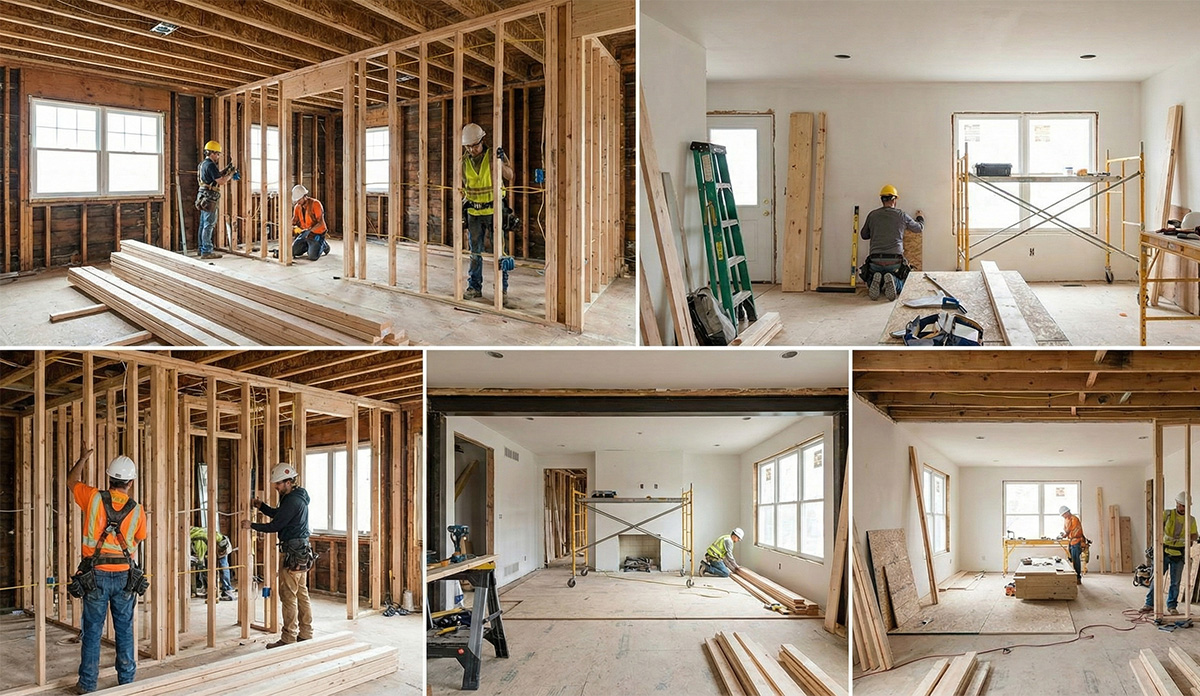
Yes — TopVolk serves the full Seattle Metro area. South of SeaTac: Burien, Tukwila, Des Moines, Kent, Federal Way, and Renton. North: Seattle proper (all neighborhoods from Beacon Hill to Ballard). East: Bellevue, Kirkland, Redmond, Issaquah, and Sammamish. We also cover Snohomish County — Lynnwood, Edmonds, Mountlake Terrace — and unincorporated Pierce County. Most SeaTac-adjacent jobs schedule on the same 2–4 week window as work inside the city. If insulation is part of a larger remodel — bathroom gut, kitchen rebuild, or ADU build-out — that's exactly the multi-trade coordination TopVolk handles. Call (206) 591-1096 or schedule a free on-site consultation directly with Vladislav.
Ready to start your Insulation in SeaTac?
Free on-site consultation with Vladislav. Line-item pricing — no vague ranges.
We Also Serve Nearby Cities
What Our SeaTac Customers Say
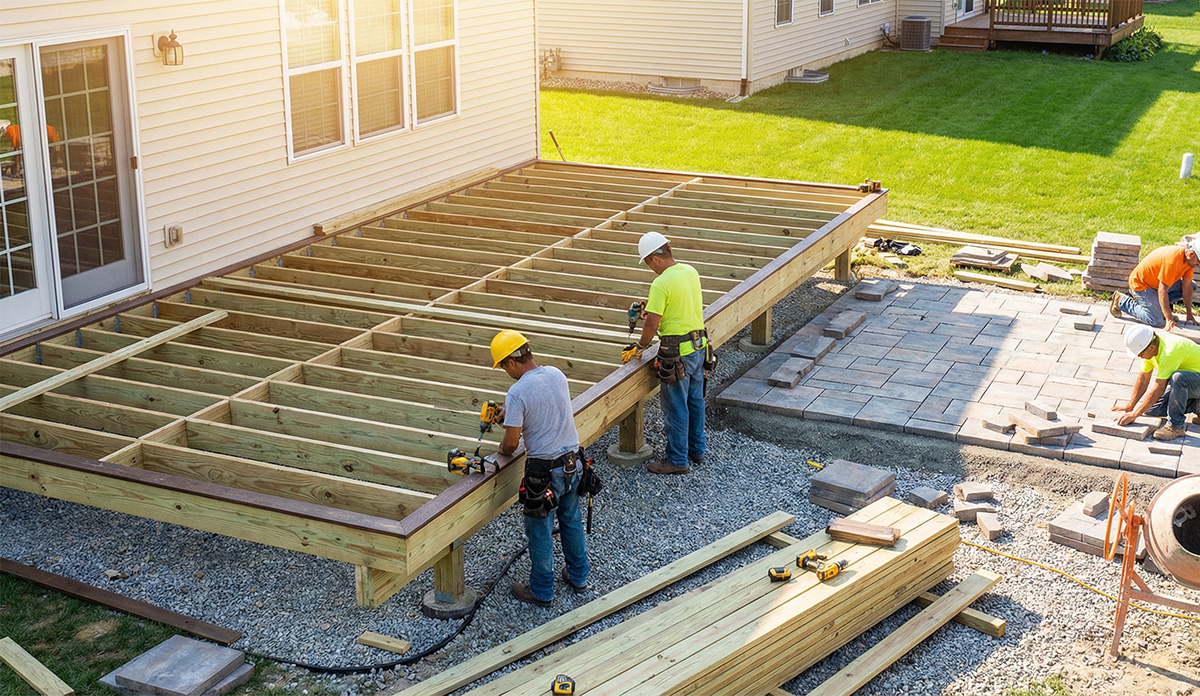
Vlad and his team did an amazing job! They built our deck in just 3 days—no issues at all. Communication was easy, and Vlad helped us choose right deck planks. Installation was quick and flawless. Highly recommend!
Really happy with the service! Vlad was easy to communicate with and helped us to find the best garage door opener. The installation was quick and he did a perfect job. A few months later, I had a question and he came by the same day - even on a weekend. That kind of follow-up is rare these days!
Vlad replaced a bathroom exhaust fan and gave me a reasonable quote up front with no hidden fees. While replacing the fan, he discovered a plumbing vent issue causing mold. He fixed the pipe and treated the mold at a reasonable cost. I really appreciate his honesty!
Outstanding work done by Vlad and team for our home cabinet/living room interior work. Very professional and reasonable charges. Love the service.
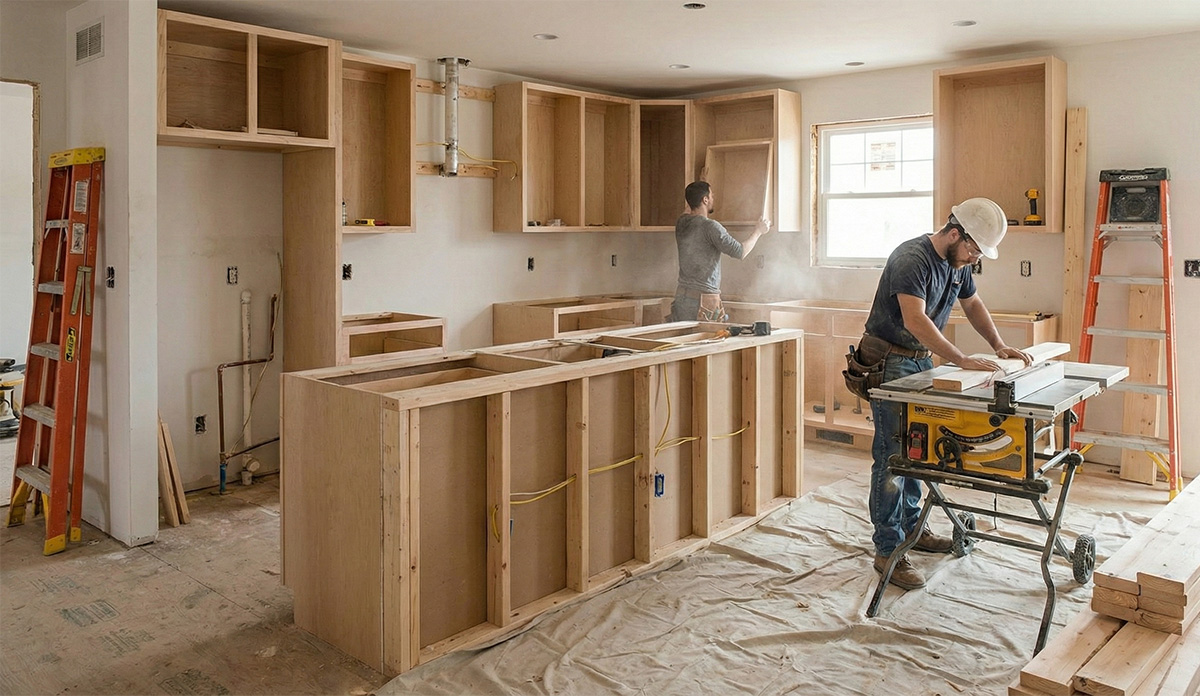
We hired TopVolk for a full kitchen remodel and couldn't be happier. From the initial consultation to final walkthrough, Vlad was professional and attentive to every detail. The result exceeded our expectations!
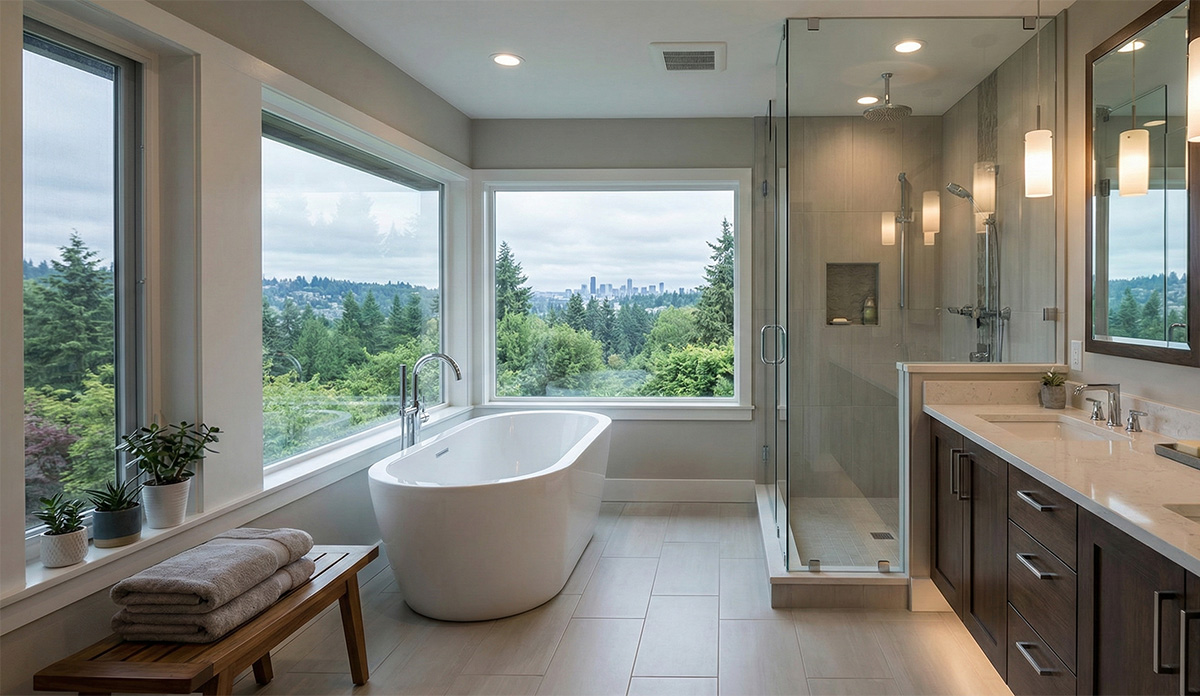
Excellent bathroom renovation! Vlad completed the project on time and on budget. His attention to detail and craftsmanship is outstanding. We'll definitely hire him again for future projects.